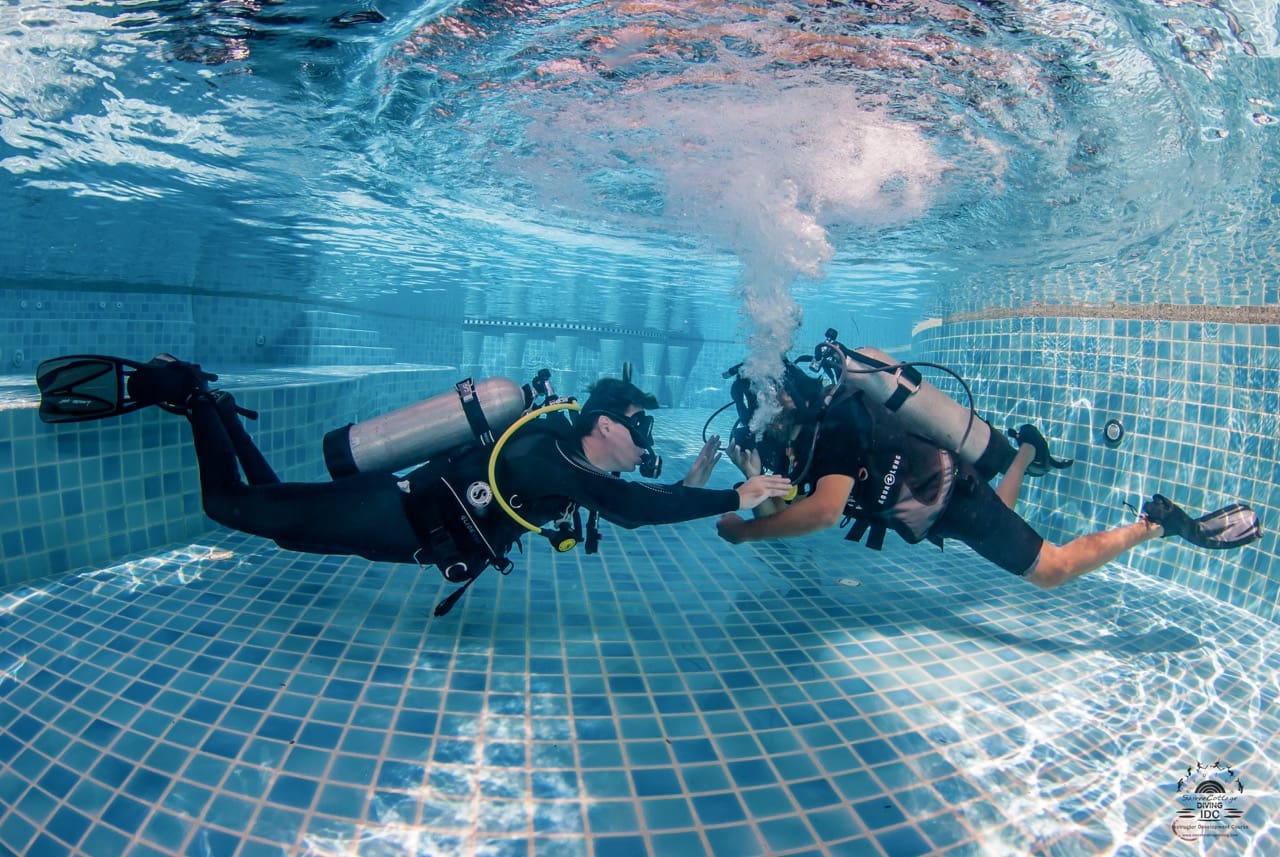
Knowing how to deal with a Free Flowing Regulator while scuba diving can be life saving. It is surprisingly easy to breath though a free flowing regulator. During your PADI Open Water Diver Course you learn how to breath through a free flowing regulator for at least 30 seconds.
Why do we get a free flowing regulator?
A failing regulator underwater usually results in a free flow. But why does this happen? This usually happens when scuba diving in cold water. In your scuba cylinder you have a lot of pressure. When full you will have 200 bar or 3000 psi. When you take a breath you reduce that high pressure to around 10 bar in your regulators first stage. Reducing the pressure also reduces temperature. This can cause your regulator to freeze when you are diving in cold water, resulting in a free flowing regulator in most regulator models.
How to fix a free flowing regulator?
If you don’t have the proper training, you should not try and fix a free flowing regulator. You should always bring it to a certified scuba technician if your regulator free flows. We recommend if possible to send your regulator to get serviced by a scuba technician that has the qualification of the brand and model of your regulator. For example bring your Aqualung regulator to a Aqualung Technician, an Apex Regulator to an Apex Technician and a ScubaPro Regulator to a ScubaPro Technician.
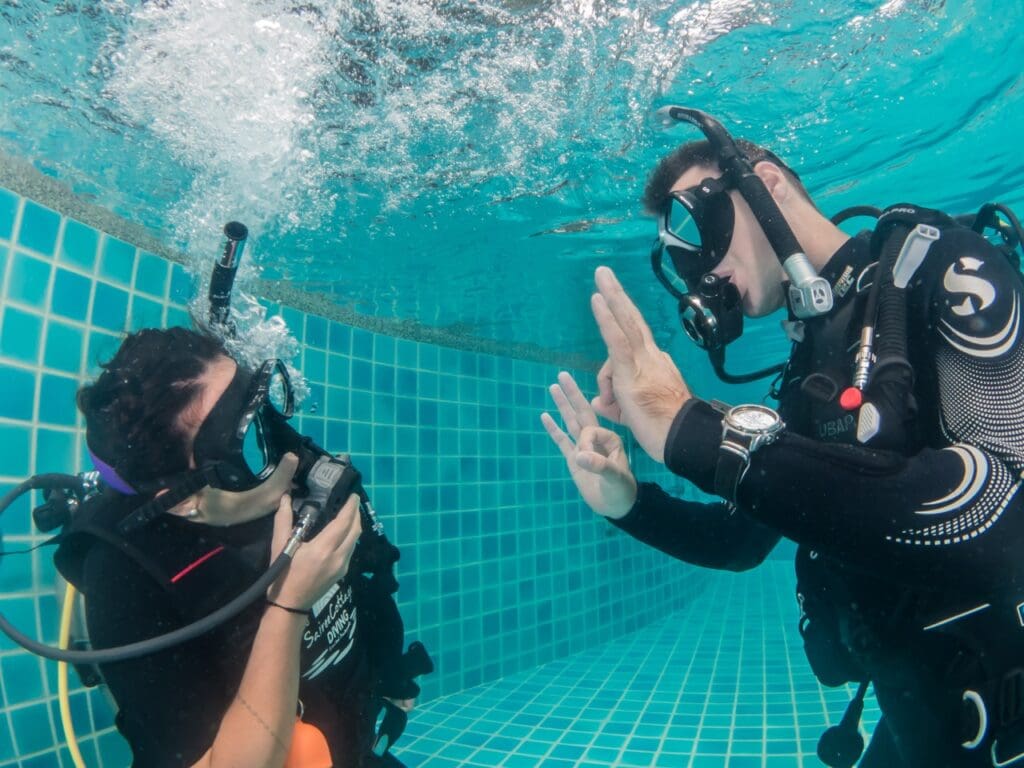
How To Breath From a PADI Free Flowing Regulator Skill
- Tilt your head to the right
- Take a few breaths
- When comfortable, take out your regulator
- Leave half the mouth piece in your mouth
- Leave the other side of the mouth piece resting on your left cheek
- Gently purge the regulators purge button
- Gently breath in and out from the regulator
- After 30 seconds replace your regulator and resume normal breathing
Watch this video on how to breath from a Free Flow Regulator:
Teaching the PADI Free Flowing Regulator Skill
Are you a Diving Instructor, are you thinking about becoming a PADI Dive Instructor or are you doing your PADI IDC Course? Then you need to know how to teach the Free Flow Regulator skill. Check out this article we wrote on How to Teach the PADI Free Flowing Regulator skill.
Also check out this video on how you learn to teach the Free Flow Regulator skill during your PADI IDC Course:
FAQ’s
What is a free-flowing scuba regulator?
A free-flowing scuba regulator continuously releases air without stopping, often caused by freezing, sand, or malfunction. Divers must know how to breathe from it safely as part of standard PADI Open Water Diver training.
How do you breathe from a free-flowing regulator underwater?
To breathe from a free-flowing regulator, place it in your mouth, tilt your head to the side, and sip the bubbles. Never inhale continuously — instead, time your breaths with the escaping air. This skill is essential for dive emergencies and is taught during confined water sessions.
Why do scuba regulators free-flow?
Scuba regulators can free-flow due to cold water freezing the first stage, improper adjustment, debris like sand or salt, or equipment malfunction. Regular maintenance and training can reduce the risk of free-flow events.
Is it dangerous to breathe from a free-flowing regulator?
It’s not dangerous if handled correctly. With proper training, divers can safely manage a free-flow situation by using controlled breathing techniques or switching to an alternate air source.
Is breathing from a free-flowing regulator part of the PADI Open Water Course?
Yes. The skill is included in the PADI Open Water Diver Course and is typically practiced in confined water sessions. It prepares new divers to remain calm and react effectively in an out-of-air or regulator malfunction scenario.
How do I stop a regulator from free-flowing?
You can attempt to stop a regulator from free-flowing by gently tapping the purge button, checking hose routing, or switching to an alternate air source. However, in most cases, it’s better to finish the dive and service the equipment afterward.
Should I ascend immediately if my regulator free-flows?
Not always. If you can breathe safely and control your buoyancy, continue the dive briefly or signal your buddy. Ascend only when safe to do so, following proper procedures like a safety stop when possible.
Can cold water diving cause free-flow issues?
Yes, cold water diving significantly increases the risk of free-flow due to ice forming in the first stage. Using environmentally sealed regulators and proper techniques can help prevent this issue.